

Table of Contents
- How to Save on Groceries: Start With a Plan
- Meal Planning to Save Money on Your Grocery Bill
- Smart Shopping Tactics: Unit Prices, Bulk Buying, and Store Brands
- Apps to Save Money on Groceries and Loyalty Programs
- Couponing Strategies for Groceries That Actually Work
- How to Reduce Food Waste and Save Money Simultaneously
- Seasonal Shopping and Psychology of Grocery Store Layout
- Common Mistakes That Sabotage Your Grocery Savings
Last Updated: July 19, 2026
How to Save on Groceries: Start With a Plan
Families who plan ahead consistently spend 20-30% less on food than those who shop impulsively. The difference isn't about sacrifice, it's about strategy.
Understanding Your Current Grocery Spending
Pull your last three months of receipts and categorize purchases by proteins, produce, grains, dairy, snacks, and prepared foods. Most shoppers discover they're spending far more on convenience items than realized. Set a baseline number for your current average monthly spend. A realistic savings goal is 15-25% of your current spending.
Setting a Realistic Budget Target
For a family of four, a moderate budget ranges from 600-900 monthly, though this varies by region and dietary preferences. Calculate your target by taking current spending and subtracting 15-20%. Test your budget for two weeks before committing to a full month, then adjust based on actual patterns.
Meal Planning to Save Money on Your Grocery Bill
Families that meal plan spend 23% less on groceries than those who don't. Without a plan, you're making dozens of micro-decisions in the store, each one a chance to overspend.
Building Your Weekly Meal Plan
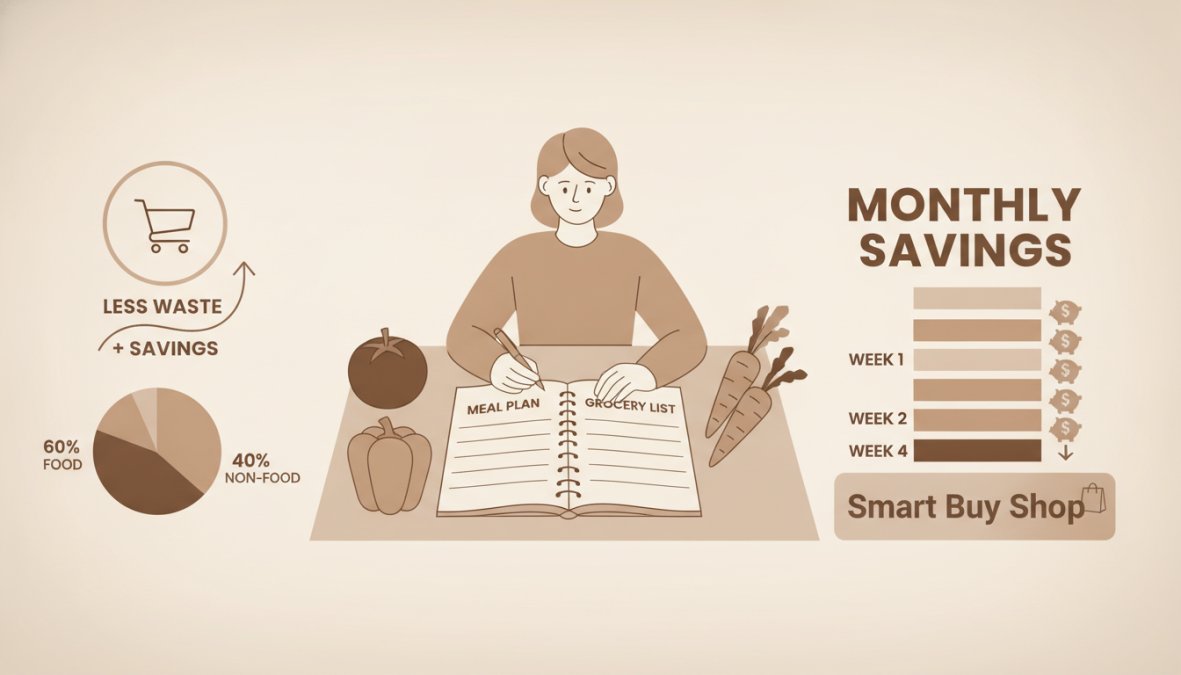
Start with five dinner ideas using recipes your family actually eats. Choose recipes with overlapping ingredients, if three meals use chicken in different forms, buy one larger package and portion it across meals. Plan for one or two repeat meals. Build in flexibility by planning five dinners without assigning specific days, allowing you to swap meals based on sales or preferences.
Creating a Grocery List From Your Plan
Group items by category: produce, proteins, dairy, grains, pantry staples, and frozen items. Note how many of each ingredient you need and which meals require it. Check your pantry before shopping to avoid rebuying staples. Stick to your list, when you reach for something not on it, ask yourself: Is this in my meal plan? Do I have room in my budget? Will I actually eat this?
Smart Shopping Tactics: Unit Prices, Bulk Buying, and Store Brands
Most shoppers never check unit prices, never buy bulk, and automatically reach for name brands. These three habits alone account for 15-25% overspending.
Comparing Unit Prices and Generic Labels
Unit price is the cost per ounce, pound, or unit of measurement, printed on the shelf tag. A larger package almost always costs less per unit, but compare carefully. Store brands are often made in the same facility as name brands and work especially well for canned goods, frozen vegetables, rice, beans, oil, vinegar, spices, and dairy.
Buying in Bulk Without Waste
Bulk buying saves money only if you actually use what you buy. Buy bulk for items with long shelf lives: rice, beans, pasta, canned goods, frozen vegetables, and frozen proteins. For proteins, divide large packages into meal-sized portions, label with the date, and freeze. Use within three months. This strategy cuts protein costs by 20-30% compared to buying individual packages.
Apps to Save Money on Groceries and Loyalty Programs
Digital tools have transformed grocery savings. The combination of digital coupons, price matching, and loyalty rewards can reduce your bill by 10-20% beyond other strategies.
Digital Coupons and Price-Matching Tools
Most major grocery chains offer digital coupon apps where coupons load directly to your loyalty card. Price-matching apps like Ibotta and Checkout 51 let you earn cash back on specific purchases. Families report earning 30-50 dollars monthly through these apps. Some stores price-match competitors, bring competitor ads or show them on your phone.
Maximizing Loyalty Cards and Rewards
Sign up for every store's loyalty program where you shop regularly. They're free. Loyalty programs offer personalized digital coupons based on your purchase history and points that accumulate toward discounts. Some stores offer bonus points during specific weeks, stock up on non-perishables during these weeks if the discount is substantial.
Couponing Strategies for Groceries That Actually Work
Effective couponing focuses on items already in your meal plan. A coupon for something you don't eat isn't savings, it's spending money you wouldn't have spent.
Finding Legitimate Coupons Without the Clutter
Find coupons through manufacturer websites, store apps, and coupon apps like Ibotta and Fetch. Organize coupons by category in a small envelope or folder. Set a rule: only clip coupons for items you buy regularly or items that align with this week's meal plan.
Stacking Coupons With Sales and Loyalty Discounts
The real savings come from combining tools. A manufacturer coupon plus a store coupon plus a loyalty discount plus a sale can reduce an item's price by 40-60%. Watch for sales cycles, certain items go on sale predictably. When you see the pattern, buy several during the sale. Stack discounts in this order: sale price first, then manufacturer coupon, then store coupon, then loyalty discount.
How to Reduce Food Waste and Save Money Simultaneously
The average household throws away 10-15% of groceries purchased. Reducing waste is as effective as finding discounts.
Proper Storage and Pantry Organization
Produce stored correctly lasts twice as long. Herbs in a glass of water last two weeks instead of three days. Greens in paper towels in a sealed container last longer than in original packaging. Label freezer items with the date and use a "first in, first out" system. Organize your pantry by category and expiration date, with earlier dates in front.
Using What You Have Before Buying More
Before shopping, use what's in your fridge and freezer. Plan meals around items nearing expiration. Keep a "use first" section in your fridge for items nearing expiration. Repurpose leftovers, last night's roasted chicken becomes today's chicken salad, tomorrow's tacos, and later in the week, soup.
Seasonal Shopping and Psychology of Grocery Store Layout
Produce prices fluctuate seasonally. Buying seasonal produce costs 30-50% less than out-of-season and tastes better.
Buying Seasonal Produce and Local Options
Winter: root vegetables, squash, citrus, leafy greens Spring: asparagus, peas, strawberries, artichokes Summer: berries, stone fruits, tomatoes, peppers, zucchini Fall: apples, pears, grapes, pumpkin, Brussels sprouts
Frozen produce is harvested at peak ripeness and frozen immediately. Nutritionally, it's equivalent to fresh. Farmers markets often have lower prices than grocery stores, especially toward the end of the day when vendors want to avoid taking inventory home.
Navigating Store Layout to Avoid Impulse Buys
Grocery stores place most profitable items at eye level. Healthier, cheaper items are on lower shelves. Check lower shelves first. Perimeter shopping focuses on whole foods: produce, proteins, dairy. The center aisles contain processed foods with higher markups.
Avoid shopping when hungry, hunger triggers impulse purchases. Eat before shopping. You'll stick to your list better and spend less.
Common Mistakes That Sabotage Your Grocery Savings
Shopping without a list causes you to buy 30-40% more than planned. Buying everything at one store is inefficient, different stores have different strengths. Ignoring expiration dates creates waste. Assuming larger packages always cost less is false, compare unit prices. Shopping hungry leads to emotional purchases. Overbuying because items are on sale defeats the purpose. Not rotating pantry stock creates waste. Skipping loyalty programs leaves money on the table.
Saving on groceries doesn't require deprivation or extreme behavior. It requires a system: planning, smart shopping, strategic tool use, and waste reduction. The combination of these strategies typically saves 25-35% on your grocery bill within two months. Start with meal planning this week. Add loyalty programs next week. Layer in bulk buying the week after. Build your savings system gradually, and it becomes automatic.
| Strategy | Implementation Time | Monthly Savings Potential | Difficulty Level |
|---|---|---|---|
| Meal planning | 30 minutes | 8-12% | Easy |
| Loyalty programs | 15 minutes | 5-8% | Easy |
| Unit price comparison | 10 minutes per trip | 5-10% | Easy |
| Bulk buying | 20 minutes | 8-15% | Medium |
| Digital coupons | 10 minutes | 3-7% | Easy |
| Seasonal shopping | 5 minutes research | 5-10% | Easy |
| Food waste reduction | Ongoing habits | 5-10% | Medium |
Frequently Asked Questions
What is the best way to save money on groceries without sacrificing quality?
The best approach combines meal planning, comparing unit prices on store brands, and using loyalty programs strategically. Start by tracking your current spending, then create weekly meal plans based on what's on sale. Use apps for digital coupons and shop seasonally to reduce costs. Buying in bulk for non-perishables and freezing items extends your savings without compromising nutrition or freshness.
How can apps to save money on groceries actually help me reduce my grocery bill?
Grocery savings apps offer digital coupons, price-matching alerts, and cash-back rewards that stack with loyalty programs. Many apps show unit prices to help you compare costs quickly. Some track sales cycles at your local supermarket, notifying you when items hit their lowest prices. The key is using apps consistently, even modest discounts of 10-15% per trip add up to significant annual savings when combined with other strategies.
Is buying in bulk always cheaper, or can it lead to food waste?
Bulk buying saves money on non-perishables like grains, canned goods, and frozen vegetables, but fresh items require careful planning. Buy perishables in bulk only if your household will use them before spoilage. Use proper storage methods, freezing, airtight containers, and beeswax food wraps, to extend shelf life. Track your pantry inventory to avoid duplicate purchases. Smart bulk buying reduces your unit cost while preventing waste that erases those savings.
How does meal planning help me save on groceries compared to shopping without a plan?
Meal planning to save money reduces impulse purchases and food waste by ensuring you buy only what you'll use. Plan meals around sales and seasonal produce, then create a detailed grocery list matching your plan. This prevents overbuying, reduces trips to the store (which triggers impulse buys), and helps you use pantry staples strategically. Studies show planned shoppers spend 20-30% less while wasting significantly less food than those shopping without a list.
This article was written using GrandRanker


