

Table of Contents
- Why Stainless Steel Requires Special Care
- What You'll Need: Essential Cleaning Supplies
- Step-by-Step: How to Clean Stainless Steel Appliances
- Natural Stainless Steel Cleaner Methods
- How to Clean Stainless Steel Sink: Grain Direction Matters
- Achieving Streak-Free Stainless Steel Finish
- Removing Stubborn Stains, Grease, and Mineral Deposits
- What to Avoid: Products That Damage Stainless Steel
Last Updated: July 18, 2026
Why Stainless Steel Requires Special Care
Stainless steel demands specific care because its finish is engineered differently than other materials. The surface contains chromium, which creates a protective oxide layer that resists rust. Cleaning incorrectly damages this layer, leaving the material vulnerable to discoloration and corrosion. Additionally, steel has a directional grain pattern that, when cleaned against the grain, traps particles and creates visible scratches.
A refrigerator door cleaned the wrong way develops water spots that won't come off, or worse, permanent etching. Sinks cleaned with bleach develop pitting corrosion that spreads over time. The good news is that proper cleaning techniques are straightforward once you know what to avoid.
What You'll Need: Essential Cleaning Supplies
Recommended Cleaning Agents
White vinegar is the gold standard for stainless steel because it cuts through mineral deposits and fingerprints without damaging the protective oxide layer. Isopropyl alcohol removes stubborn residue and dries quickly without leaving water spots. Bar Keepers Friend and Bon Ami are powdered cleaners specifically formulated for stainless steel with mild abrasives that remove discoloration safely. For everyday maintenance, dish soap and warm water handles most routine tasks effectively.
WD-40 serves as a final polish, creating a water-repellent barrier on stainless steel surfaces. Use it sparingly only after the surface is completely clean. Acetone and methylated spirits remove stubborn grease without leaving residue.
Avoid bleach entirely, it reacts with stainless steel and creates permanent pitting and discoloration. Chlorine-based cleaners have the same problem. Abrasive scouring powders and steel wool scratch the surface irreversibly, creating a dull, damaged appearance that no amount of polishing can restore.
Tools and Materials to Have Ready
Microfiber cloths are essential for stainless steel cleaning. Unlike cotton or paper towels, microfiber traps particles and oils without scratching the surface. A soft-bristled brush helps remove debris from crevices without causing damage. Non-scratching sponges work for gentle scrubbing when needed.
Keep lint-free cloths for final drying and polishing. Regular towels leave fibers behind that create a dull appearance. Spray bottles make it easy to apply vinegar or cleaning solutions evenly across large surfaces. Rubber gloves protect your hands from prolonged contact with cleaning agents.
Step-by-Step: How to Clean Stainless Steel Appliances
Start by removing loose debris with a dry microfiber cloth, wiping in the direction of the grain. This prevents dust and crumbs from scratching the surface when you apply liquid cleaners.
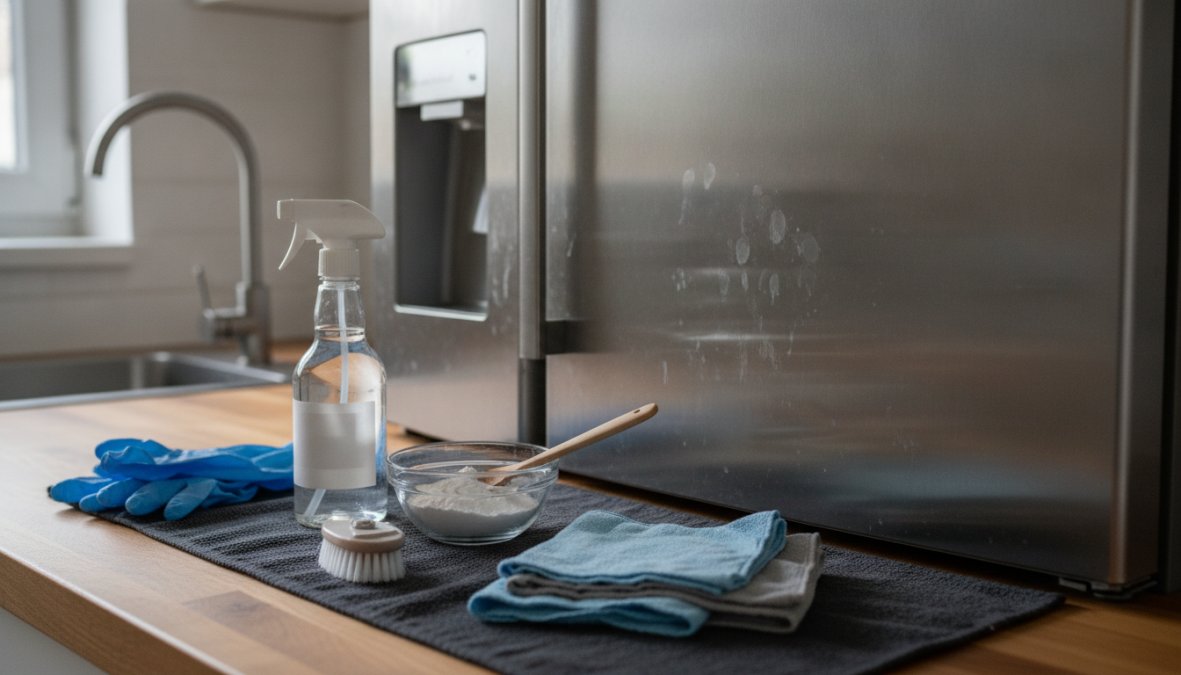
For everyday cleaning, mix warm water with a few drops of dish soap in a spray bottle. For mineral deposits or stubborn fingerprints, use white vinegar diluted with equal parts water. Spray the solution onto the cloth rather than directly onto the appliance to prevent excess liquid from dripping into crevices.
Wipe the entire surface with the cloth, moving in the direction of the grain. For stubborn grime, let the cleaning solution sit for two to three minutes before wiping. Rinse the cloth with clean water and wipe down the entire surface again to remove any cleaning residue. Dry immediately with a clean, lint-free cloth, water droplets left on stainless steel create permanent mineral deposits.
For a polished finish, apply a small amount of WD-40 to a cloth and buff the surface lightly. This creates a water-repellent layer that makes future cleaning easier.
Natural Stainless Steel Cleaner Methods
White Vinegar and Microfiber Cloth Technique
White vinegar is nature's stainless steel cleaner at a fraction of commercial product costs. The acetic acid dissolves mineral deposits, water spots, and fingerprint oils without damaging the protective chromium oxide layer.
Mix equal parts white vinegar and water in a spray bottle. Spray the solution onto a microfiber cloth, never spray directly onto the stainless steel surface. Wipe the entire surface following the grain direction. For mineral deposits, let the solution sit for five minutes before wiping. After wiping, rinse with a cloth dampened in clean water and dry immediately.
The vinegar method is completely safe around food preparation areas, making it ideal for cleaning stainless steel cookware and utensils.
Dish Soap and Warm Water Solution
For routine maintenance and light cleaning, dish soap and warm water is sufficient and gentle. Use a few drops of mild dish soap in a bowl of warm water. Dampen a microfiber cloth in the soapy water and wipe the surface following the grain direction. Rinse with a cloth dampened in clean water and dry immediately.
This method is ideal for daily or weekly maintenance, preventing grime from accumulating to the point where stronger cleaners are needed.
How to Clean Stainless Steel Sink: Grain Direction Matters
Most stainless steel sinks have a grain pattern running lengthwise from the faucet toward the drain. Cleaning against this grain traps particles and creates visible scratches. Start by removing visible debris with a dry microfiber cloth, wiping lengthwise along the grain. Rinse the sink with hot water to loosen dried food and mineral deposits.
For food buildup, use a soft-bristled brush or non-scratching sponge, moving along the grain direction. Apply white vinegar diluted with water to stubborn mineral deposits and let it sit for five minutes. Wipe with a cloth moving along the grain. For grease buildup, dish soap and warm water works effectively.
After cleaning, rinse thoroughly with clean water and dry completely with a lint-free cloth. For a polished finish, apply a thin layer of mineral oil or WD-40 to a cloth and buff the sink lightly.
Achieving Streak-Free Stainless Steel Finish
Polished vs. Brushed Stainless Steel: Different Approaches
Polished stainless steel has a mirror-like, reflective finish that shows water spots and fingerprints immediately. Brushed stainless steel has a matte finish with a directional grain pattern that hides minor imperfections better.
For polished stainless steel, dry immediately with a lint-free cloth and buff with a second cloth to remove any remaining moisture. For final polishing, apply a tiny amount of mineral oil to a cloth and buff in circular motions. Brushed stainless steel requires cleaning along the grain direction to maintain the matte finish. After cleaning and drying, no additional polishing is needed.
Hard Water vs. Soft Water Adjustments
Hard water contains dissolved minerals that create stubborn spots on stainless steel. White vinegar becomes even more important because the acetic acid specifically dissolves mineral deposits. When cleaning with hard water, rinse with distilled water instead of tap water for the final rinse to prevent new mineral deposits from forming.
For areas with extremely hard water, apply a water-repellent coating after cleaning. A thin layer of mineral oil creates a barrier that causes water to bead and run off rather than evaporating into spots. Reapply every two to four weeks depending on cleaning frequency.
Removing Stubborn Stains, Grease, and Mineral Deposits
For grease buildup, apply Bar Keepers Friend mixed into a paste and let it sit for five to ten minutes. Wipe the paste away with a damp cloth, moving along the grain direction. Rinse thoroughly and dry immediately.
For rust spots or discoloration, acetone or methylated spirits applied to a cloth and rubbed gently across the affected area often removes the discoloration. Work in a well-ventilated area and test on an inconspicuous spot first.
Mineral deposits on faucets respond well to white vinegar applied directly to a cloth and held against the deposit for several minutes. For faucet aerators clogged with mineral deposits, unscrew them and soak in vinegar overnight.
| Problem | Cleaning Agent | Application Method | Expected Result |
|---|---|---|---|
| Mineral deposits | White vinegar | Spray and let sit 5 min | Spots dissolve |
| Grease buildup | Bar Keepers Friend | Paste, sit 10 min | Grease breaks down |
| Rust spots | Acetone or methylated spirits | Apply to cloth, rub gently | Discoloration lifts |
| Water spots | Microfiber cloth + vinegar | Wipe, then dry immediately | Spots disappear |
| Fingerprints | Dish soap solution | Wipe along grain | Clean, clear surface |
What to Avoid: Products That Damage Stainless Steel
Bleach and chlorine-based cleaners are the most damaging products you can use on stainless steel. These chemicals react with the chromium oxide protective layer and create permanent pitting and discoloration. If you accidentally use bleach, rinse immediately and thoroughly with water.
Steel wool and abrasive scouring pads scratch the surface irreversibly. Once the protective oxide layer is compromised, the underlying steel begins to corrode. Harsh abrasive powders like generic scouring powder or pumice also scratch the surface. Bar Keepers Friend and Bon Ami are specifically formulated to be gentle enough for stainless steel.
Acidic cleaners stronger than vinegar can damage the protective layer over time. Stick with vinegar for acid-based cleaning. Leaving water on stainless steel creates mineral deposits that become increasingly difficult to remove. Always dry stainless steel immediately after cleaning or rinsing.
Abrasive techniques matter as much as products. Scrubbing in circular motions or against the grain disrupts the surface finish and traps particles. Always move along the grain direction and use light pressure.
Stainless steel surfaces stay beautiful and protected when you follow grain-direction cleaning practices and avoid damaging products. The difference between a stainless steel appliance that looks new after five years and one that looks worn down is consistent, proper maintenance. Start with quality tools, they make every cleaning session faster and more effective. Keep your stainless steel looking pristine for years to come.
Frequently Asked Questions
What is the best homemade cleaner for stainless steel?
White vinegar mixed with water is one of the most effective natural stainless steel cleaners. Combine equal parts white vinegar and water in a spray bottle, spray onto the surface, and wipe with a microfiber cloth following the grain direction. For tougher grease, add a few drops of dish soap to the solution. This method removes fingerprints, mineral deposits, and light discoloration without harsh chemicals. Always dry thoroughly with a clean cloth to prevent streaks and water spots.
Can you use vinegar to clean stainless steel appliances?
Yes, vinegar is safe for stainless steel appliances when properly diluted. Mix equal parts white vinegar and water, apply with a soft cloth, and wipe in the direction of the grain. Vinegar cuts through grease and mineral deposits effectively. However, never use undiluted vinegar or bleach-based products on stainless steel, as these can cause corrosion and discoloration. Always rinse with clean water and towel-dry to prevent streaking and protect the surface from damage.
How do you clean stainless steel without leaving streaks?
To achieve streak-free stainless steel, always wipe in the direction of the grain using a microfiber cloth or non-scratching cloth. After cleaning, immediately towel-dry the surface with a lint-free cloth to prevent water spots. For polished stainless steel, use products like Bar Keepers Friend or Bon Ami sparingly. Hard water areas may require distilled water for the final rinse to avoid mineral deposits. Brushed stainless steel is more forgiving than polished finishes and naturally hides streaks better.
What should you not use to clean stainless steel?
Avoid abrasive pads, steel wool, bleach, and acetone on stainless steel, as these cause scratches and corrosion. Never use scouring powders or harsh scrubbing tools. Avoid methylated spirit and harsh solvents that strip protective oils. Do not apply WD-40 directly for cleaning, it's for lubrication only. Steer clear of chlorine-based cleaners and products containing chlorides, which accelerate rust formation. Stick to mild detergent, white vinegar, and gentle microfiber cloths for safe, effective cleaning.
This article was written using GrandRanker


