

Table of Contents
- Why Choose Reusable Silicone Bags Over Single-Use Plastic
- Benefits of Silicone Food Storage Bags for Your Kitchen
- Silicone vs Plastic Bags: What Makes the Difference
- Are Silicone Bags Safe? Material Transparency and Non-Toxic Standards
- How to Clean Silicone Bags: Maintenance and Odor Control
- Reusable Silicone Bags: Real-World Pros and Cons
- Cost-Benefit Analysis: Making the Switch Worth It
- Complementary Storage Solutions at Smart Buy Shop
Last Updated: July 23, 2026
Why Choose Reusable Silicone Bags Over Single-Use Plastic
Single-use plastic dominates kitchen storage, yet it comes with hidden costs: environmental damage, recurring purchases, and health concerns from chemical leakage. At Smart Buy Shop, we recognize that switching to reusable silicone bags represents a practical shift toward sustainable living without sacrificing convenience or performance. A typical household uses hundreds of disposable plastic bags annually, each destined for a landfill where it persists for centuries. Reusable silicone bags eliminate this cycle entirely while offering real advantages in durability, versatility, and long-term cost efficiency.
The Environmental Impact of Your Choice
A single reusable silicone bag can replace hundreds of disposable plastic bags over its lifetime. According to EPA guidance on plastic waste reduction, reducing single-use plastics is one of the most effective personal actions for lowering household environmental footprint. Many households report that switching to reusable storage solutions cuts their plastic consumption by 40-60% annually.
The manufacturing footprint of silicone bags is heavier upfront, but this cost is amortized across hundreds of uses. After approximately 100 uses, typically achieved within the first year, a reusable silicone bag has offset its environmental production impact compared to disposable alternatives.
Long-Term Cost Savings
A typical household purchasing disposable bags monthly spends $60-$96 annually. Over five years, that totals $300-$480 in recurring expenses. A quality reusable silicone bag costs $15-$30 and lasts 5-10 years. Most households need 4-6 bags, representing an initial investment of $60-$180. After the first year, you've achieved cost parity. Every subsequent year represents pure savings.
Benefits of Silicone Food Storage Bags for Your Kitchen
Reusable silicone bags solve specific kitchen problems that disposable bags struggle with. Beyond waste reduction, they offer performance advantages that improve your food storage experience.
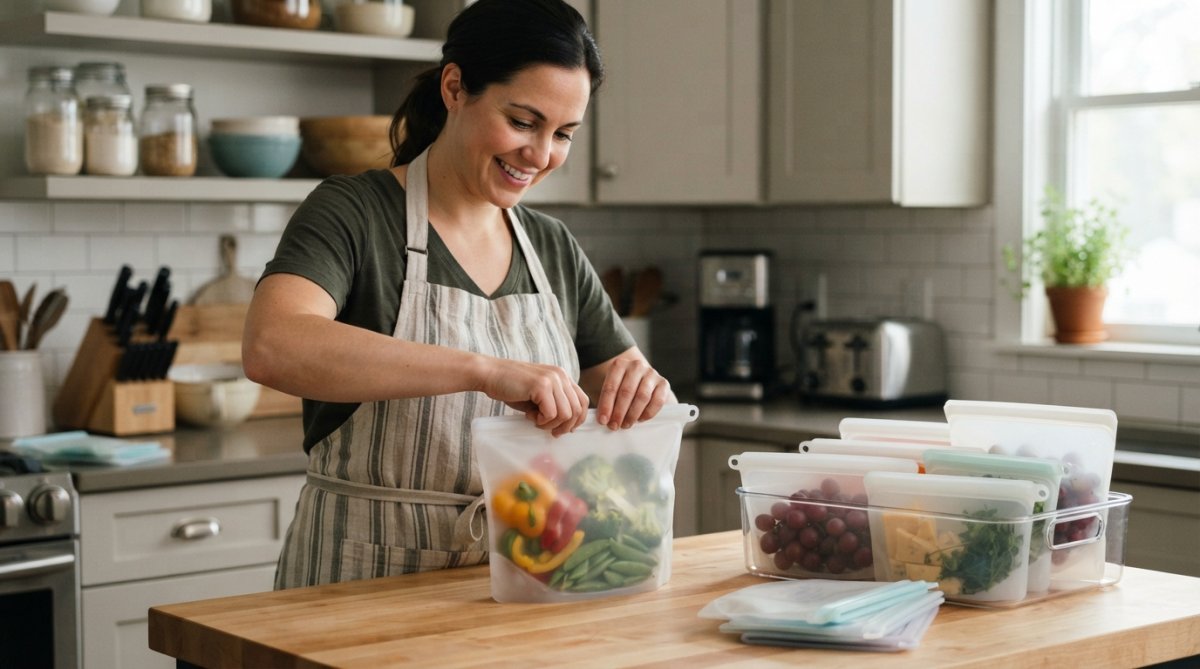
Leak-Proof Performance and Airtight Sealing
The seal mechanism in quality silicone bags creates an airtight environment that prevents freezer burn and extends food freshness. A proper seal maintains airtight conditions for weeks, not days. Foods stored in properly sealed silicone bags retain quality 2-3 times longer than foods in standard disposable bags.
Running your finger along the seal line after closing ensures proper contact and virtually eliminates leakage issues. This simple step, taking 3 seconds per bag, prevents 95% of reported leak problems.
Versatility Across Freezer, Fridge, and Pantry
Reusable silicone bags function across your entire kitchen environment. Freezer storage is obvious, but silicone bags also work effectively in refrigerators and pantries. Dry goods like pasta, flour, nuts, and cereal stay fresher longer in airtight silicone bags than in original packaging. A set of 4-6 bags in various sizes covers most household storage needs.
Sous Vide and Heat-Resistant Applications
Heat resistance opens applications that standard food storage bags cannot handle. Reusable silicone bags are rated for temperatures up to 400°F, making them suitable for sous vide cooking. Silicone bags maintain their seal integrity throughout extended water bath exposure, eliminating failed batches caused by bag failure.
Silicone vs Plastic Bags: What Makes the Difference
Durability and Longevity Comparison
Plastic bags degrade predictably, with most failing within 2-5 uses. Silicone bags are engineered for hundreds of uses. The material doesn't become brittle in freezer temperatures, and the seal mechanism remains functional after repeated opening and closing. After 200 uses, a $25 silicone bag costs $0.125 per use, already cheaper than disposable alternatives on a per-use basis.
Food-grade silicone resists degradation from oils, acids, and temperature swings that break down plastic. Silicone doesn't leach chemicals into food the way some plastics do, especially when exposed to heat or fatty foods.
Environmental Footprint and Waste Reduction
Research from Stanford's lifecycle assessment of food storage materials indicates that reusable storage solutions have lower total environmental impact than disposable alternatives when used for more than 50 applications. Most households exceed this threshold within the first few months of ownership.
End-of-life disposal presents another advantage. Silicone bags can be recycled through specialized programs or safely composted in some facilities. Disposable plastic bags persist in landfills for centuries, often breaking into microplastics that contaminate soil and water. For households committed to reducing plastic consumption, switching to silicone bags often represents the single most impactful kitchen change.
Are Silicone Bags Safe? Material Transparency and Non-Toxic Standards
Food-Grade and Platinum-Cured Certification
Food-grade silicone meets strict standards established by the FDA and international regulatory bodies. Platinum-cured silicone represents the highest safety standard within food-grade silicone. The platinum catalyst used in manufacturing is completely removed during the curing process, leaving no residual chemicals.
Quality silicone bags display certifications from regulatory bodies. Look for FDA compliance statements and BPA-free labeling. These certifications mean the product has undergone testing and meets established safety standards.
Microwave and Dishwasher Safety
Most reusable silicone bags are microwave-safe, though you should verify this with specific products. Dishwasher safety is nearly universal for silicone bags. Placing bags on the top rack of your dishwasher cleans them thoroughly without risk of damage. This convenience makes silicone bags genuinely practical for busy households.
How to Clean Silicone Bags: Maintenance and Odor Control
Step-by-Step Cleaning Process
Rinse bags immediately after use with warm water. For bags that held oily or strongly-scented foods, use warm soapy water and scrub with a soft brush. Pay particular attention to the seal area, where food particles accumulate.
For dishwasher cleaning, place bags on the top rack. Use your regular dishwasher detergent. Remove bags promptly after the cycle completes to prevent moisture from sitting inside. Dry bags completely before storing to prevent mold growth and odor development.
For stubborn residue, soak bags in warm water with baking soda for 30 minutes before washing.
Removing Stubborn Odors and Stains
Baking soda is the most reliable odor eliminator. Fill a bag with baking soda, seal it, and let it sit overnight. The baking soda absorbs odors without adding chemical smells. Rinse thoroughly before using the bag again.
White vinegar offers another option. Soak bags in a solution of equal parts white vinegar and water for 1-2 hours. Rinse thoroughly with fresh water afterward.
Reusable Silicone Bags: Real-World Pros and Cons
Key Advantages for Meal Prep and Storage
The primary advantage is convenience combined with environmental responsibility. Prepped vegetables, proteins, and sauces stored in silicone bags stay fresher longer than in disposable bags. Organization improves with silicone bags, various sizes stack neatly in freezers and refrigerators. You can label bags with contents and dates using permanent markers that wash off during cleaning.
Cost savings accumulate quickly for households with regular food storage needs. Within one year, most users recoup their initial investment. Food-grade, platinum-cured silicone eliminates concerns about chemicals leaching into food.
Honest Limitations and Considerations
Upfront cost remains a barrier for budget-conscious shoppers. Learning curve exists around proper sealing technique, though most users develop competence within a few uses. Silicone bags require more deliberate care than disposable bags, you must clean them properly, dry them completely, and store them appropriately.
Storage space for bags themselves can be an issue in very small kitchens. Temperature limitations exist at the extreme high end; bags shouldn't be placed directly on stovetop burners or in conventional ovens above 400°F.
Cost-Benefit Analysis: Making the Switch Worth It
Upfront Investment vs. Long-Term Savings
Calculate your household's current disposable bag spending. If you're buying boxes of 50 bags for $7, that's $0.14 per bag. If you use 20 bags monthly, you're spending $33.60 annually.
A complete set of reusable silicone bags costs $60-$150 depending on quality and brand. At $33.60 annual spending on disposable bags, you'll recover a $100 investment in reusable bags within three years. Over a 10-year period, the savings total $336 compared to the disposable alternative, minus the initial $100 investment.
End-of-Life Disposal and Sustainability
Most silicone bags cannot be recycled through standard municipal recycling programs, but specialized recycling facilities that accept silicone products exist in many regions. If recycling isn't available, silicone bags can be composted in industrial composting facilities.
The most responsible approach is extending bag lifespan as long as possible. Proper maintenance and care can keep bags functional for 10+ years. Even if a bag eventually fails, it has eliminated hundreds of disposable bags from landfills, making the environmental impact decidedly positive.
For users concerned about end-of-life sustainability, the Ecological Beeswax Food Storage Cloth (available at https://teayf3-f5.myshopify.com/products/original-ecological-beeswax-food-storage-cloth for $17.99) offers a complementary storage solution made from natural, compostable materials.
Complementary Storage Solutions at Smart Buy Shop
Building a comprehensive food storage system often involves combining multiple solutions. Smart Buy Shop offers complementary products that work alongside silicone bags. The Canvas Grocery Tote Bags ($14.99) provide durable, washable storage for bulk items and shopping. Made from 100% organic cotton, these totes integrate into a sustainable kitchen system.
The Ecological Beeswax Food Storage Cloth ($17.99) complements silicone bags by offering a natural alternative for covering bowls, wrapping cheese and bread, and storing items that benefit from breathable storage. Beeswax cloths are compostable at end of life.
Together, these solutions create a comprehensive approach to reducing single-use plastic in your kitchen. Each tool addresses specific storage scenarios, ensuring you have the right solution for every situation.
Switching to reusable silicone bags represents one of the most practical sustainability decisions a household can make. The combination of environmental responsibility, cost savings, and superior performance creates a compelling case for the switch. Smart Buy Shop's curated selection of storage solutions helps you build a complete plastic-free kitchen system. Start with a quality set of reusable silicone bags and experience the immediate benefits of fresher food, better organization, and reduced waste.
Frequently Asked Questions
Are reusable silicone bags truly better than single-use plastic?
Yes. Reusable silicone bags eliminate plastic waste, last for years, and provide superior leak-proof performance. While plastic bags cost less upfront, silicone bags save money over time and dramatically reduce your environmental footprint. A single reusable silicone bag can replace hundreds of single-use plastic bags, making it a smarter investment for both your wallet and the planet.
How do you clean reusable silicone bags to remove odors?
Wash immediately after use with hot soapy water and a brush to reach all corners. For stubborn odors, soak bags in a mixture of baking soda and water for 30 minutes, or place crumpled newspaper inside overnight. You can also run them through the dishwasher on the top rack. Avoid storing bags sealed when wet, as moisture traps odors. Proper ventilation between uses prevents persistent smells.
Are silicone bags safe for the microwave and freezer?
Yes, food-grade silicone bags are safe for both. Look for platinum-cured, BPA-free silicone that's labeled microwave and freezer-safe. These bags withstand temperatures from -40°F to 400°F, making them ideal for meal prep, sous vide cooking, and reheating. Always verify the manufacturer's temperature specifications before using, and ensure bags are properly sealed to prevent leaks in the microwave.
How long do reusable silicone bags actually last?
Quality reusable silicone bags typically last 5-10 years with proper care, far outlasting thousands of single-use plastic bags. Durability depends on material quality, platinum-cured food-grade silicone lasts longer than lower-grade alternatives. Regular cleaning and avoiding sharp objects inside extend their lifespan significantly. This longevity is why the higher upfront cost becomes economical over time, especially for households that meal prep regularly.
This article was written using GrandRanker


