

Table of Contents
- Understanding Your Skin Type Before Starting an Essential Skincare Routine
- The Basic Skincare Steps You Need to Know
- The Correct Skincare Routine Order for Morning and Evening
- Cleansing: The Foundation of Any Skincare Routine
- Skincare for Oily Skin Beginners: Targeted Approach
- Best Beginner Skincare Products to Start With
- Skin Barrier Health and Patch Testing for Beginners
- Common Beginner Skincare Mistakes to Avoid
Last Updated: July 27, 2026
Understanding Your Skin Type Before Starting an Essential Skincare Routine for Beginners
Your skin type determines which products will help and which might cause irritation. Getting this wrong leads most beginners to abandon skincare within three months. At Smart Buy Shop, we've helped countless customers identify their skin type and build routines that stick. Understanding whether your skin is oily, dry, combination, or sensitive takes just minutes but transforms your entire approach.
Identifying Oily, Dry, Combination, and Sensitive Skin
Oily skin feels slick or shiny, especially in the T-zone (forehead, nose, chin), with larger pores and potential breakouts. If your skin looks greasy hours after washing, you have oily skin. The good news: oily skin tends to age more slowly due to natural oil protection.
Dry skin feels tight after cleansing, with flaking, rough patches, or dull appearance. The challenge is finding products that hydrate without feeling heavy.
Combination skin means different areas behave differently, typically an oily T-zone with normal or dry cheeks. This is the most common skin type but requires a layered approach addressing multiple concerns.
Sensitive skin reacts easily to products, weather, or stress, with redness, stinging, or burning. Sensitive skin often has a compromised skin barrier.
The simplest identification method: wash your face with a gentle cleanser and wait 30 minutes without applying anything. If your skin feels tight, you're likely dry. If it looks shiny, you're oily. If some areas feel tight while others shine, you have combination skin.
The Basic Skincare Steps You Need to Know
Most people overcomplicate skincare. The essential routine for beginners focuses on fundamentals that work: cleansing, hydrating, and protecting. The basic steps are cleanse, treat (optional), moisturize, and protect with sunscreen during the day. Everything else is supplemental.
Why Order Matters in Your Routine
Skincare products work through layering, and application order determines whether they penetrate or sit on the surface unused. Apply products from thinnest to thickest consistency. Water-based serums and essences go on first, right after cleansing when skin is still slightly damp. Oils and heavier creams go last because they create an occlusive barrier. Sunscreen is the exception, it goes last in your AM routine to form a protective layer.
Skipping this step means wasting money on products that can't do their job.
The Correct Skincare Routine Order for Morning and Evening
Your morning and evening routines differ because your skin has different needs. Morning routines prioritize protection and preparation. Evening routines focus on repair and deeper treatment since skin cell turnover accelerates at night.
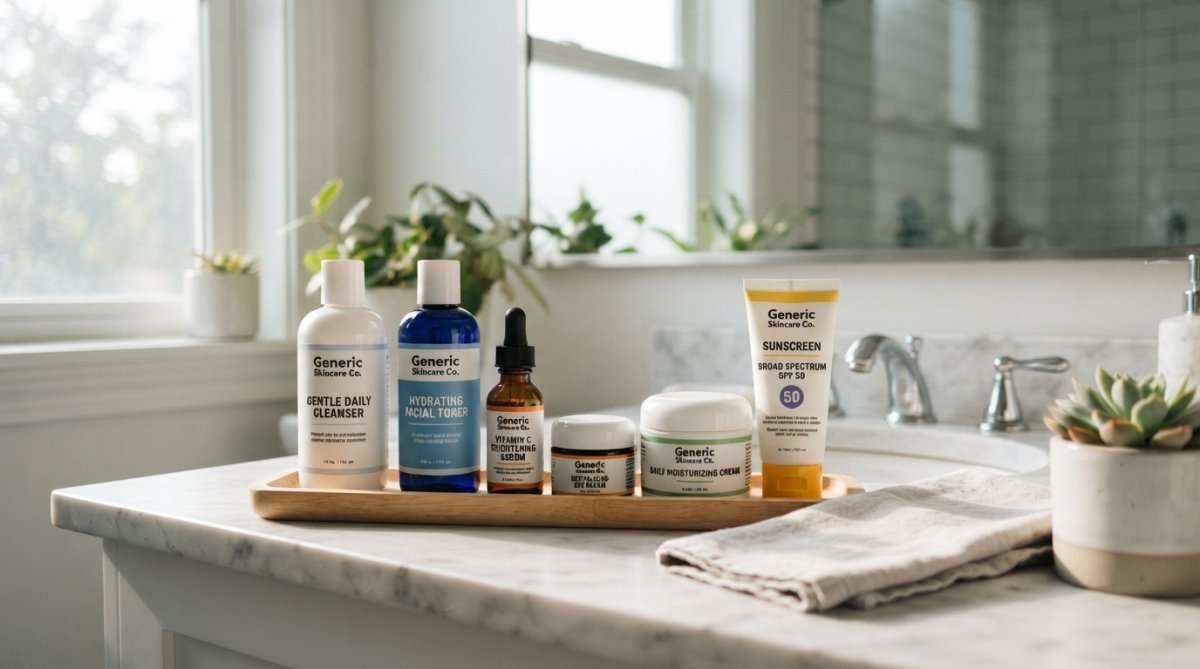
AM Routine Steps
Start with a gentle cleanser to remove overnight oil buildup. Use lukewarm water, hot water strips natural oils and damages the skin barrier. Pat (don't rub) your skin dry.
Apply a hydrating essence or toner while skin is still slightly damp. If using a serum like vitamin C or hyaluronic acid, apply it now and wait 30-60 seconds for absorption.
Apply your moisturizer next. For oily skin, use lightweight gel or lotion. For dry skin, use richer cream. Combination skin typically benefits from medium-weight moisturizer. Gently press the moisturizer in rather than rubbing.
The final step is sunscreen with at least SPF 30. This is non-negotiable. UV damage causes premature aging, hyperpigmentation, and skin cancer. Apply generously, most people use too little. Wait a few minutes for it to set before applying makeup.
Your morning routine should take 5-10 minutes total.
PM Routine Steps
Begin with the same gentle cleanser. Some prefer a slightly richer cleanser at night. If you wear makeup, consider double cleansing: first with an oil or balm cleanser to remove makeup, then with a water-based cleanser to remove residue.
Apply your hydrating toner or essence while skin is still damp.
This is when you introduce active ingredients like retinoids, vitamin C serums, or niacinamide. Your skin is more receptive at night, and these ingredients can be irritating in the morning when exposed to sun and environmental stressors. Start with one active ingredient and introduce others gradually over weeks or months.
Apply your night moisturizer. This can match your AM moisturizer or be richer, depending on your skin type. Some use a heavier cream or sleeping mask at night for extra hydration.
You don't need sunscreen at night unless using photosensitizing ingredients like vitamin C or retinoids.
Your evening routine takes 10-15 minutes because you're spending more time on treatment and repair.
Cleansing: The Foundation of Any Skincare Routine
Cleansing is the most important step, yet most people rush through it or get it wrong. Your cleanser must remove oil, dirt, makeup, and pollution without stripping your skin's natural protective layer.
The best cleanser removes impurities without leaving your skin feeling tight or squeaky. If your skin feels tight after cleansing, your cleanser is too harsh. If it still feels oily, your cleanser isn't removing enough buildup.
For oily skin, a foaming or gel cleanser works well. For dry skin, a cream or milk cleanser is gentler. Combination skin typically does well with a balanced gel or cream cleanser.
Avoid cleansers with sulfates, which strip the skin barrier. Avoid scrubs and exfoliating cleansers for daily use, they cause micro-tears. Save physical exfoliation for 1-2 times per week at most.
Skincare for Oily Skin Beginners: Targeted Approach
Oily skin requires a different strategy. The goal isn't eliminating all oil, your skin needs natural oils for protection, but managing excess sebum and preventing clogged pores.
Start with a gentle foaming or gel cleanser that removes oil without over-drying. Twice daily is standard, but if your skin feels tight, reduce to once daily with a gentler formula. Over-cleansing makes oily skin worse because your skin responds by producing even more oil.
After cleansing, apply a hydrating toner or essence. This seems counterintuitive for oily skin, but hydration is essential. Dehydrated oily skin produces more oil to compensate. A lightweight hydrating product helps balance this.
Use a lightweight, non-comedogenic moisturizer. Look for gel or lotion formulas rather than creams. Your moisturizer should feel invisible, not leave a greasy residue.
For oily skin, serums with niacinamide or salicylic acid help regulate sebum production and keep pores clear. Niacinamide is particularly effective for oily, acne-prone skin.
Sunscreen is non-negotiable for oily skin, but use a mattifying or oil-free formula specifically designed for oily or acne-prone skin.
The key with oily skin is consistency. Most beginners skip moisturizer or use harsh products, which backfires. A gentle, consistent routine that hydrates and protects actually regulates sebum production better than aggressive stripping.
Best Beginner Skincare Products to Start With
You don't need an expensive routine to see results. Start simple, then add complexity only when you understand how your skin responds to basic products.
Essential Products and Smart Buy Shop Recommendations
A gentle cleanser is your first purchase. Look for something that removes oil and dirt without leaving your skin tight or uncomfortable.
A hydrating moisturizer comes next. This single product addresses hydration, essential for all skin types. Choose based on your skin type: lightweight gel for oily skin, richer cream for dry skin, balanced lotion for combination skin.
Sunscreen with SPF 30 or higher is the most important skincare product you'll buy. It prevents premature aging, hyperpigmentation, and skin cancer. This is non-negotiable, regardless of your skin type or sun exposure.
Once these three products work well, add a serum or essence. Hyaluronic acid serums add hydration for all skin types. Vitamin C serums brighten and protect. Niacinamide serums help regulate sebum and reduce redness.
Smart Buy Shop offers several products ideal for beginners. The [Advanced Brightening Moisturizer](https://teayf3-f5.myshopify.com/products/brightening-moisturizer) at $38.00 delivers long-lasting hydration while restoring skin's natural balance. The Anti-wrinkle Facial Serum at $15.99 provides a 5-in-1 formula addressing multiple concerns. The Anti-aging essence for youthful skin at $12.99 restores your skin's natural glow and firmness. The Bio-Collagen Deep Moisture Face Mask Set at $19.99 provides intensive weekly hydration.
Start with cleanser, moisturizer, and sunscreen. Add one additional product every 2-4 weeks once you understand how your skin responds.
| Product | Price | Best For | Key Benefit |
|---|---|---|---|
| Advanced Brightening Moisturizer | $38.00 | All skin types | Long-lasting hydration |
| Anti-wrinkle Facial Serum | $15.99 | Mature or textured skin | Multi-benefit treatment |
| Anti-aging essence | $12.99 | All skin types | Hydration boost |
| Bio-Collagen Face Mask Set | $19.99 | Weekly treatment | Intensive hydration |
Skin Barrier Health and Patch Testing for Beginners
Your skin barrier is the outermost layer composed of lipids and dead skin cells. It protects your skin from environmental damage, bacteria, and irritants while preventing water loss. A healthy barrier is smooth, resilient, and glowing. A compromised barrier is red, irritated, sensitive, and prone to breakouts.
Most skincare problems, sensitivity, redness, acne, dryness, stem from barrier damage, not from your skin type. Fixing your barrier often fixes everything else.
Why Your Skin Barrier Matters
Your skin barrier regulates what enters and exits your skin. When healthy, beneficial ingredients penetrate effectively and irritants stay out. When compromised, irritants penetrate easily and beneficial ingredients can't work. You end up in a cycle where every new product causes irritation.
Common causes of barrier damage include over-exfoliation, harsh cleansers, too many active ingredients at once, and inadequate moisturizing. Ironically, people with barrier damage often strip their skin more aggressively, thinking they need to "cleanse" or "treat" their way to health, making everything worse.
Signs of barrier damage include tightness, redness, sensitivity to normally tolerable products, excessive dryness or oiliness, and persistent breakouts despite acne products. If you have these symptoms, the fix isn't a new treatment, it's barrier repair.
Barrier repair is simple: use a gentle cleanser, skip all active ingredients temporarily, hydrate with essences and moisturizers, and protect with sunscreen. Most people see significant improvement within 2-4 weeks.
How to Patch Test New Products Safely
Before applying any new product to your entire face, patch test it first. Choose a small, inconspicuous area, behind your ear, on your inner arm, or a small section of your jawline. Apply a small amount and wait 24 hours. If you experience redness, burning, itching, or irritation, that product isn't for you.
If the patch test succeeds, apply the product to a small face area (like one cheek) and observe for 3-5 days. If no irritation develops, incorporate it into your full routine. This gradual introduction is especially important for sensitive skin or compromised barriers.
Keep a simple log of new products and how your skin responds. This helps identify patterns and predict whether new products will work for you.
Common Beginner Skincare Mistakes to Avoid
Using too many products too quickly. Beginners often buy entire skincare lines and use everything at once. Start with three products: cleanser, moisturizer, sunscreen. Add one new product every 2-4 weeks.
Over-exfoliating. Physical and chemical exfoliants are powerful. Using them daily or multiple times weekly damages your barrier and causes sensitivity. Limit exfoliation to 1-2 times per week, and skip it if your skin is irritated.
Skipping sunscreen. This is the single biggest mistake. UV damage causes premature aging, hyperpigmentation, and skin cancer. Use SPF 30+ every single day, even on cloudy days and indoors near windows.
Using water that's too hot. Hot water strips natural oils. Use lukewarm water for cleansing. Pat your skin dry instead of rubbing it.
Expecting overnight results. Skincare takes time. Your skin cells turn over roughly every 28 days, so you need at least 4-6 weeks to see meaningful changes. Switching products weekly prevents your skin from adapting.
Not moisturizing. Beginners with oily skin often skip moisturizer, thinking it will make their skin greasier. This backfires, dehydrated skin produces more oil to compensate. Use a lightweight formula if you have oily skin, but don't skip this step.
Ignoring your skin barrier. Most skincare problems stem from barrier damage. If your skin is irritated, red, or sensitive, simplify your routine and focus on hydration and protection rather than adding more active ingredients.
Building an essential skincare routine for beginners doesn't require expensive products or complicated systems. It requires understanding your skin, using consistent, gentle products, and protecting your skin barrier. Most people see dramatic improvements within 6-8 weeks of following a simple, consistent routine tailored to their skin type. Smart Buy Shop's curated selection of skincare essentials makes it easy to start with quality products at affordable prices. Begin with the fundamentals, stay consistent, and add complexity only when you understand how your skin responds.
Frequently Asked Questions
What are the 3 most important skincare products for beginners?
The three essential products for any beginner skincare routine are a gentle cleanser, a moisturizer, and sunscreen with SPF. These form the foundation of skin health by removing impurities, maintaining hydration, and protecting against sun damage. A cleanser removes dirt and oil, a moisturizer restores hydration to prevent dryness, and SPF protects your skin from UV damage that causes premature aging. Start with these three before adding serums, toners, or treatments.
What is the correct order to apply skincare for beginners?
The basic skincare routine order is: cleanser, toner (optional), serum, moisturizer, and sunscreen in the morning. At night, follow the same order but skip sunscreen and consider adding treatments like retinoids or essences. Always apply products from thinnest to thickest consistency so lighter products absorb before heavier ones create a barrier. This layering technique ensures each active ingredient can penetrate effectively and work synergistically for better results.
How often should beginners exfoliate, and what type is best?
Beginners should exfoliate 1-2 times per week maximum, depending on skin sensitivity. Chemical exfoliants (like AHAs or BHAs) are gentler and more effective than physical scrubs for most skin types. Chemical exfoliants dissolve dead skin cells without harsh scrubbing, making them ideal for sensitive or acne-prone skin. Start with once weekly and adjust based on how your skin responds. Over-exfoliation can damage your skin barrier, so less is more when beginning.
Is a minimalist skincare routine enough, or do I need many products?
A minimalist routine with just a cleanser, moisturizer, and sunscreen is absolutely enough for beginners and can be very effective. More products don't guarantee better results, consistency and using the right products for your skin type matter more. Many people see excellent results with 3-5 core products. You can add serums, essences, or treatments later once you understand how your skin responds. Focus on building a sustainable routine you'll actually use daily rather than overwhelming yourself with too many steps.
What ingredients should beginners avoid in skincare?
Beginners should avoid starting with strong active ingredients like high-concentration retinoids, vitamin C, or multiple actives at once. These can irritate skin and damage your barrier if you're not accustomed to them. Also avoid products with fragrance, essential oils, or alcohol if you have sensitive skin. Patch test any new product on a small area first, especially if it contains active ingredients. Always introduce one new product at a time, waiting 1-2 weeks between additions to monitor how your skin responds.
How long does it take for a beginner skincare routine to show results?
Most skincare routines require 4-6 weeks of consistent use to show visible improvements in skin texture, hydration, and clarity. Your skin naturally regenerates every 28 days, so patience is essential. Some products like moisturizers show benefits within days, while others addressing fine lines or hyperpigmentation take longer. Consistency matters more than perfection, using your routine daily, even when you don't see immediate results, is key to achieving lasting skin improvements.
Do I need different products for morning and night skincare routines?
Yes, morning and night routines differ slightly. Morning routines should include SPF sunscreen to protect against UV damage, while night routines can include stronger actives like retinoids that make skin sun-sensitive. Both should include a cleanser and moisturizer. Your AM routine prepares and protects skin, while your PM routine repairs and treats. This allows you to address different skin concerns at optimal times, protection during the day and cellular turnover support at night.
This article was written using GrandRanker


