

Table of Contents
- Best Nonstick Frying Pans: Quick Comparison
- Best Overall Nonstick Pan: All-Clad HA1 Hard Anodized
- Best Budget-Friendly Option: Tramontina Professional Aluminum
- Best Ceramic Nonstick Pan: Caraway Ceramic Frying Pan
- Premium Hybrid Choice: HexClad Hybrid Nonstick Frying Pan
- Eco-Conscious Pick: Scanpan Pro IQ Fry Pan
- How Long Do Nonstick Pans Last: Durability & Lifespan
- Nonstick Pan Care Tips: Maintenance & Longevity
Best Nonstick Frying Pans: Top Picks for 2026
Last Updated: July 14, 2026
Choosing a nonstick frying pan means navigating ceramic coatings, hard-anodized aluminum, and hybrid surfaces. According to Consumer Reports cookware testing methodology, nonstick performance degrades significantly after 2-3 years of regular use, making durability and coating quality critical factors. This guide helps home cooks find the right pan for their kitchen, whether prioritizing durability, budget, or environmental impact.
Best Nonstick Frying Pans: Quick Comparison
The real differences between pans today come down to coating technology, handle design, and metal utensil compatibility.
Pan Name |
Best For |
Coating Type |
Oven-Safe Temp |
Price Range |
|---|---|---|---|---|
All-Clad HA1 Hard Anodized |
Professional durability |
Hard-anodized aluminum |
500°F |
$50-$100 |
Tramontina Professional |
Budget cooking |
Reinforced aluminum |
350°F |
$20-$40 |
Caraway Ceramic |
Design + non-toxic |
Ceramic (PTFE-free) |
550°F |
$95 |
HexClad Hybrid |
Searing + nonstick |
Hybrid stainless/nonstick |
500°F |
$100+ |
Scanpan Pro IQ |
Eco-conscious cooks |
Ceramic-titanium |
500°F |
$120+ |
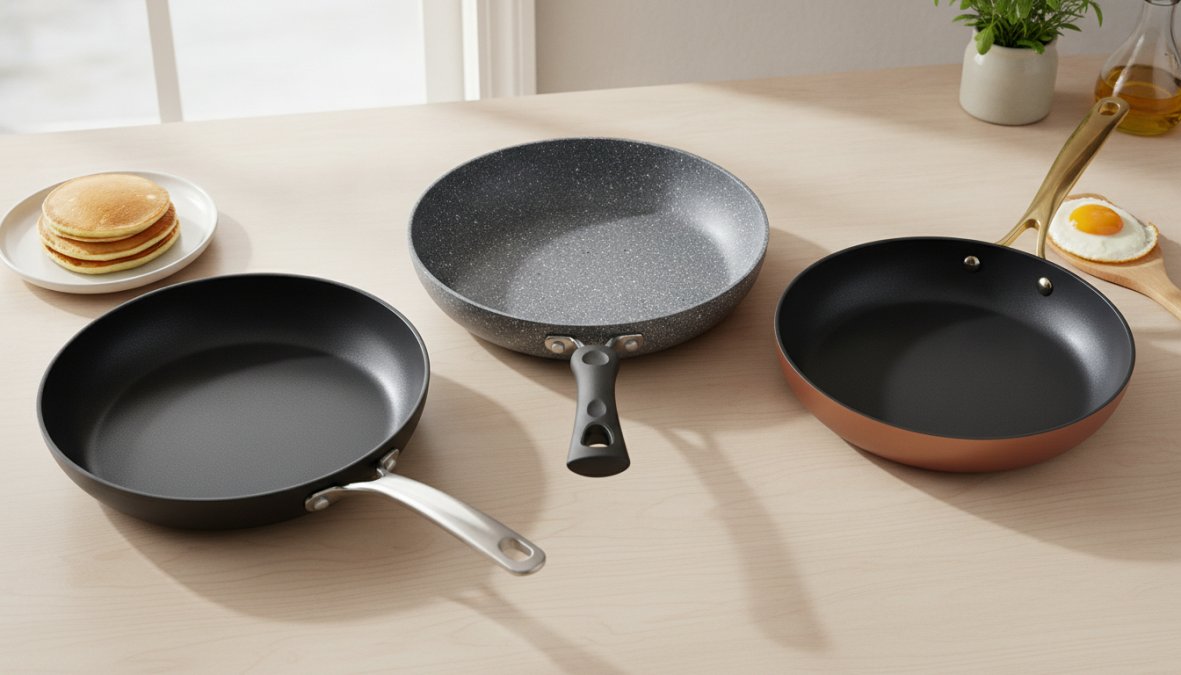
Budget pans sacrifice longevity for affordability, ceramic options prioritize health and aesthetics, and hybrid designs offer versatility at a premium. The pan you buy today should still perform well in 2028.
Best Overall Nonstick Pan: All-Clad HA1 Hard Anodized
The All-Clad HA1 delivers professional-grade performance without the restaurant price tag. Its hard-anodized aluminum construction creates an exceptionally durable cooking surface that resists warping through thousands of heat cycles. The hard-anodized process creates a surface roughly 30% harder than traditional aluminum, directly translating to longer nonstick life and even heat distribution.
The PFOA-free nonstick coating maintains its release properties for 3+ years with proper care, compared to 18 months for budget pans. The induction-compatible stainless steel base works on any cooktop, and the 500°F oven-safe rating handles everything from stovetop to finishing a frittata in the oven.
The trade-off is weight. At roughly 2.5 pounds for a 10-inch pan, it's noticeably heavier than aluminum alternatives, which matters for cooks with wrist issues.
Pros: Exceptional heat distribution, durable coating, induction-ready, professional-grade construction Cons: Hand-washing required, heavier than comparable pans, higher upfront cost
Best Budget-Friendly Option: Tramontina Professional Aluminum
The Tramontina Professional delivers surprising durability for the price. Professional kitchens use this pan because it's reliable and replaceable. The heavy-gauge 3004 aluminum alloy resists denting and maintains its shape through years of service. The reinforced nonstick coating performs well for everyday cooking: pancakes release cleanly, ground meat browns without sticking, and fried eggs slide easily onto the plate.
The riveted, cast stainless steel handle includes a removable silicone grip, which extends the pan's life if the grip wears. The pan is NSF-certified for professional use, a reliable signal of durability.
Limitations: the standard model is not induction-compatible (verify the product code if you have an induction cooktop). The oven-safe temperature maxes out at 350°F, ruling it out for finishing dishes in the oven.
Pros: Excellent value, durable construction, removable handle grip, professional-grade build Cons: Not induction-compatible (standard model), lower oven-safe temperature, shorter coating lifespan
Best Ceramic Nonstick Pan: Caraway Ceramic Frying Pan
The Caraway Ceramic appeals to health-conscious cooks. The mineral-based ceramic nonstick coating is free of PTFE, PFOA, and PFAS. The pan comes in modern colors (sage, cream, navy) that look good enough to go from stovetop to table.
Ceramic coatings release food cleanly for the first 1-2 years, but performance degrades more noticeably over time. The pan is oven-safe to 550°F, higher than most nonstick alternatives. The ergonomic handle stays cool during cooking, and the weight feels substantial without being burdensome.
Ceramic coatings demand careful maintenance: avoid metal utensils entirely, use only wooden or silicone tools, and hand-wash only. Dishwashers will strip the coating rapidly.
Pros: Non-toxic ceramic coating, attractive design, easy to clean, high oven-safe temperature Cons: Requires careful maintenance, shorter effective lifespan, performance degrades after 18 months
Premium Hybrid Choice: HexClad Hybrid Nonstick Frying Pan
HexClad's patented laser-etched hexagonal design combines the searing capability of stainless steel with the convenience of nonstick. The hexagonal pattern creates tiny stainless steel peaks that contact food for browning, while nonstick valleys reduce friction and prevent sticking. This solves the traditional nonstick problem: you no longer sacrifice searing power for ease.
The surface is metal-utensil safe, rare in nonstick cookware. You can use metal spatulas and tongs without worrying about coating damage. The pan is oven-safe to 500°F and works on all cooktop types including induction. The hybrid surface maintains performance far longer than traditional nonstick because the stainless steel component doesn't degrade. After 3+ years of regular use, this pan still releases food reliably.
The price is the barrier. At $100+ for a single pan, it's a long-term investment. For home cooks who use one pan for everything, the premium makes sense.
Pros: Highly durable hybrid surface, metal utensil safe, excellent searing capability, works on all cooktops Cons: Higher price point, heavier than traditional nonstick, learning curve on heat management
Eco-Conscious Pick: Scanpan Pro IQ Fry Pan
Scanpan manufactures pans from 100% recycled aluminum, reducing mining impact and energy consumption. The patented ceramic-titanium nonstick surface combines durability with environmental responsibility, you're not replacing the pan every 2 years, which reduces overall waste.
The induction-ready design with a cast-in steel plate works on any cooktop. Heat distribution is excellent, and the 500°F oven-safe rating provides flexibility. The nonstick surface performs consistently for 5+ years, significantly longer than budget ceramic or traditional PTFE pans. The manufacturing is PFAS-free and uses sustainable practices throughout the supply chain.
The handle design prioritizes comfort, and the weight feels balanced. The surface resists scratching better than ceramic alternatives, though metal utensils still aren't recommended.
Pros: Sustainable manufacturing, extremely durable coating, induction-ready, long effective lifespan Cons: High price point, requires careful maintenance
How Long Do Nonstick Pans Last: Durability & Lifespan
Nonstick pan lifespan depends almost entirely on coating quality and usage patterns. Budget aluminum pans with standard PTFE coating typically last 18-24 months of regular use. Hard-anodized pans can last 3-5 years. Premium hybrid and ceramic-titanium surfaces often perform well for 5+ years.
Degradation is gradual: eggs that once slid effortlessly start catching, ground meat sticks slightly during browning, and oil pools in certain spots. High heat accelerates degradation, cutting lifespan by 30-40% compared to moderate heat use.
Dishwasher use cuts lifespan in half. Metal utensils and steel wool accelerate coating failure. Wooden spoons, silicone spatulas, and soft sponges preserve the surface.
Long-Term Degradation Tracking
Track your pan's degradation intentionally. Cook an egg in your new pan and note how easily it releases. Repeat this test quarterly with the same heat setting, oil, and cooking time. When the egg takes noticeably longer to release, you're seeing real degradation. Most people notice this transition around month 18-24 for budget pans, month 36-48 for premium options.
Keep a simple log: date purchased, cooking frequency, and degradation observations. After one year, you'll have real data instead of assumptions. When your pan reaches end-of-life, take it to a local recycling facility rather than landfill.
Nonstick Pan Care Tips: Maintenance & Longevity
Proper care extends pan life by 50-100%. Most people sacrifice durability through preventable mistakes.
Heat management is critical. Medium and medium-high heat are ideal for nonstick cooking. Preheat the pan for 1-2 minutes rather than 5+ minutes. If you need high heat for searing, use a stainless steel or cast iron pan instead.
Season the surface with oil before cooking. Use a neutral oil with a high smoke point (avocado, grapeseed, or refined coconut oil). Coat the dry pan lightly, wipe away excess, then cook. This step takes 30 seconds and meaningfully extends coating life.
Cool the pan properly to prevent thermal shock. Never run cold water on a hot pan. Let it cool naturally for 2-3 minutes, then rinse with warm water.
Storage matters. Stack nonstick pans with paper towels or cloth between them to prevent scratches. Hanging pans on a wall rack is ideal.
Hand-Washing vs. Dishwasher Safe
Hand-washing is straightforward: rinse immediately while the pan is warm, use a soft sponge and mild dish soap, and dry with a cloth. This takes 90 seconds and preserves the coating. For stuck-on food, soak the pan in warm water with a small amount of dish soap for 10 minutes rather than scrubbing.
Dishwashers expose pans to high water temperature (140-160°F), alkaline detergent, and mechanical agitation. Even one cycle causes minor damage. Over 50 cycles, the cumulative effect is significant. If you must use the dishwasher, place the pan on the top rack and use a gentle cycle.
What to Look for in a Nonstick Pan
Coating type is the foundation. PTFE coatings are proven, reliable, and affordable. Ceramic coatings appeal to health-conscious cooks but degrade faster. Hybrid surfaces offer versatility. PFAS-free and PFOA-free options address health concerns.
Material construction determines heat distribution and longevity. Hard-anodized aluminum provides excellent heat distribution with superior durability. Stainless steel resists corrosion better but conducts heat less evenly.
Handle design affects daily usability. Riveted handles won't loosen over time. Ergonomic handles with proper weight distribution reduce hand fatigue.
Oven-safe temperature limits versatility. 350°F is the bare minimum; 500°F is standard for quality pans. Higher ratings (550°F+) give flexibility for finishing dishes in the oven.
Induction compatibility is essential if you have an induction cooktop. Check product specifications carefully; "induction-ready" is explicit.
Weight and balance affect daily usability. Lighter pans (under 2 pounds) are easier to handle but conduct heat less evenly. Heavier pans (2.5-3.5 pounds) distribute heat better but may fatigue your wrist.
Choosing the best nonstick frying pan comes down to matching your priorities to the right option. Budget-conscious cooks should accept that replacement every 2-3 years is normal. Home cooks prioritizing longevity should invest in hard-anodized or hybrid options. Health-conscious cooks willing to maintain ceramic carefully will appreciate the non-toxic benefits. The right pan is one you'll actually use daily, whether that's a $30 workhorse or a $150 long-term investment. Start with the comparison table above, identify your priorities, and commit to proper care. The difference between a pan that lasts two years and one that lasts five is almost entirely in how you treat it.
Frequently Asked Questions
What is the safest nonstick frying pan to use?
The safest nonstick frying pans are PFOA-free and PFAS-free options like Caraway, Scanpan, and ceramic-coated models. These avoid harmful chemicals associated with traditional PTFE coatings. Hard-anodized aluminum pans from brands like All-Clad and Calphalon also offer excellent safety profiles. Always check manufacturer certifications and avoid overheating any nonstick pan beyond its recommended temperature limit.
How long do the best nonstick frying pans last?
Quality nonstick frying pans typically last 3-5 years with proper care, though premium options like HexClad and Le Creuset can last 7-10+ years. Hard-anodized aluminum pans with reinforced coatings offer superior durability compared to standard nonstick surfaces. Lifespan depends heavily on maintenance—hand-washing, avoiding metal utensils, and using appropriate heat extends longevity significantly.
Are ceramic nonstick pans better than Teflon pans?
Ceramic and Teflon pans each have advantages. Ceramic pans like Caraway are non-toxic and PFAS-free, making them ideal for health-conscious cooks, but require more careful maintenance. Teflon (PTFE) pans offer excellent stick-resistance and durability when PFOA-free. Ceramic excels for low-heat cooking and aesthetics; Teflon performs better for high-heat searing and sautéing. Choose based on your cooking style and priorities.
What should I look for when buying a nonstick frying pan?
Prioritize hard-anodized aluminum construction for durability, PFOA-free or ceramic coatings for safety, and oven-safe temperatures of at least 400°F. Check for riveted handles, induction compatibility if needed, and whether the pan is dishwasher-safe or hand-wash only. Consider heat distribution quality, scratch resistance, and warranty length. Match the pan size to your cooking needs—8-10 inches suits most home kitchens.
How do you clean and maintain nonstick pans?
Hand-wash nonstick pans with warm soapy water and soft sponges to preserve coating longevity. Avoid abrasive scrubbers, metal utensils, and high-heat cooking unless the pan is metal-utensil safe. Never use cooking spray—use butter or oil instead. Store with protective liners between pans, and avoid thermal shock by letting hot pans cool before washing. Check manufacturer care instructions, as some premium pans like Le Creuset are more durable than others.
This article was written using GrandRanker


